







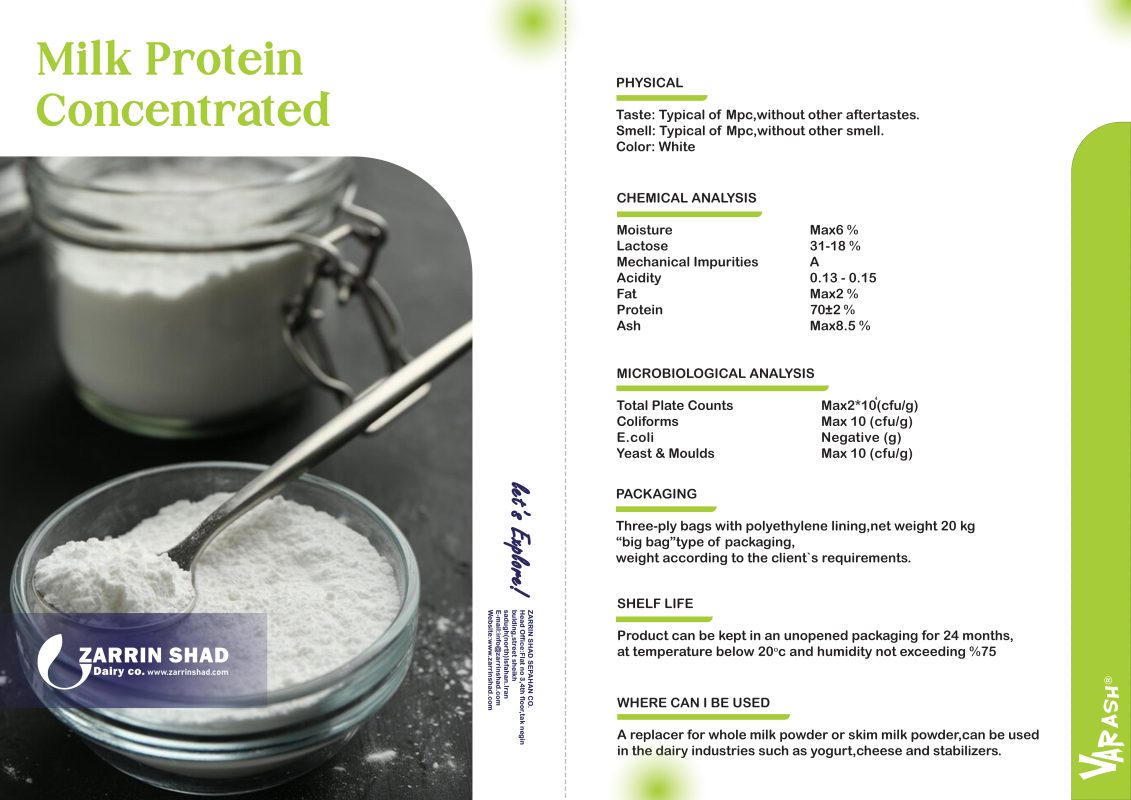
Buy MPC 70% Powder | Milk Protein Concentrate
Liquid milk typically contains around 3% fat, 3% protein, 3–4% lactose, and a large proportion of water. These figures can vary depending on several factors. In industrial dairy processing, water is removed and milk solids are concentrated to produce powdered ingredients with valuable functional properties. One of the most important of these ingredients is Milk Protein Concentrate (MPC), manufactured at Zarrin Shad Sepahan to meet industrial production standards.
In this article, we explore MPC 70% powder, its production process, industrial applications, and its role in improving the quality of dairy products, particularly yogurt.
What Is MPC 70% Powder?
MPC stands for Milk Protein Concentrate. Milk protein consists of two main components:
- Casein (approximately 80%)
- Whey proteins (approximately 20%)
At Zarrin Shad Sepahan, milk fat is first removed from the milk during MPC production. The resulting skim milk then undergoes ultrafiltration (UF). Through this membrane filtration process, lactose and some dissolved components are removed, while the protein concentration is increased in a controlled manner.
In MPC 70% powder, the protein content reaches approximately 70%, while the remaining composition consists primarily of lactose and minerals. Removing fat at the beginning of the process helps produce an ingredient with valuable functional properties for food and dairy manufacturing.
What Are the Industrial Applications of MPC 70% Powder?
Milk Protein Concentrate is a key ingredient in the food industry and is used in a wide range of products, including:
- High-protein, Greek-style, and Icelandic-style yogurts
- Processed cheeses, including cheese wedges
- Protein bars and nutritional supplements
- Processed meat products, such as sausages and cold cuts
- Bakery products and industrial dough formulations
The main reasons manufacturers use MPC 70% in food production include:
1. Increasing Protein Content and Nutritional Value
MPC is a high-quality dairy protein source used in the production of protein-enriched foods, particularly products designed for athletes and consumers seeking higher protein intake. In addition to increasing the protein content, it can contribute to greater satiety and improved nutritional value in the finished product.
2. Improving Product Texture and Stability
By increasing total solids and helping develop a stronger protein structure, MPC can contribute to a more uniform texture, higher viscosity, and improved stability in the finished product.
How Does MPC 70% Help Prevent Whey Separation in Yogurt?
Whey separation, also known as syneresis, is one of the main challenges in industrial yogurt production. MPC 70% powder increases the protein concentration and strengthens the casein-based protein network in yogurt, helping improve the water-holding capacity of the yogurt gel.
This stronger protein network helps limit the separation of liquid whey from the yogurt structure. Potential benefits include:
- Reduced whey separation
- More consistent thickness
- Creamier texture
- Improved product stability during storage
For these reasons, MPC 70% can be a valuable ingredient for industrial yogurt manufacturers seeking better texture and improved product consistency.
What Is the Difference Between MPC 70% and Milk Powder?
Although both products are derived from milk, they differ significantly in composition, functionality, and industrial applications. Conventional milk powder is generally a more economical ingredient for increasing total milk solids, but its protein content typically reaches around 30%, depending on the type of milk powder.
In contrast, MPC 70% is a specialized functional ingredient with high protein content, very low fat content, and valuable technological properties. It is used to improve the texture, consistency, and stability of dairy products and other protein-enriched food formulations.
MPC 70% Powder Specifications
|
ingredients |
amount |
|---|---|
|
moisture |
Max 6% |
|
Protein |
70 ±2% |
|
Fat |
Max 2% |
|
Mechanical Impurities |
A |
|
Ash |
Max 8.5% |
|
Lactose |
31-18% |
|
Acidity |
0.13-0.15 |



Reviews
There are no reviews yet.